
C17 · Textile
Stainless Steel Plates for the Textile Industry: 316L/304 Selection and a 7-Part Checklist
In the textile industry, we have identified 7 components that use stainless steel: the common grades 316L / 304 / 321, with thicknesses ranging from 1–400 mm.
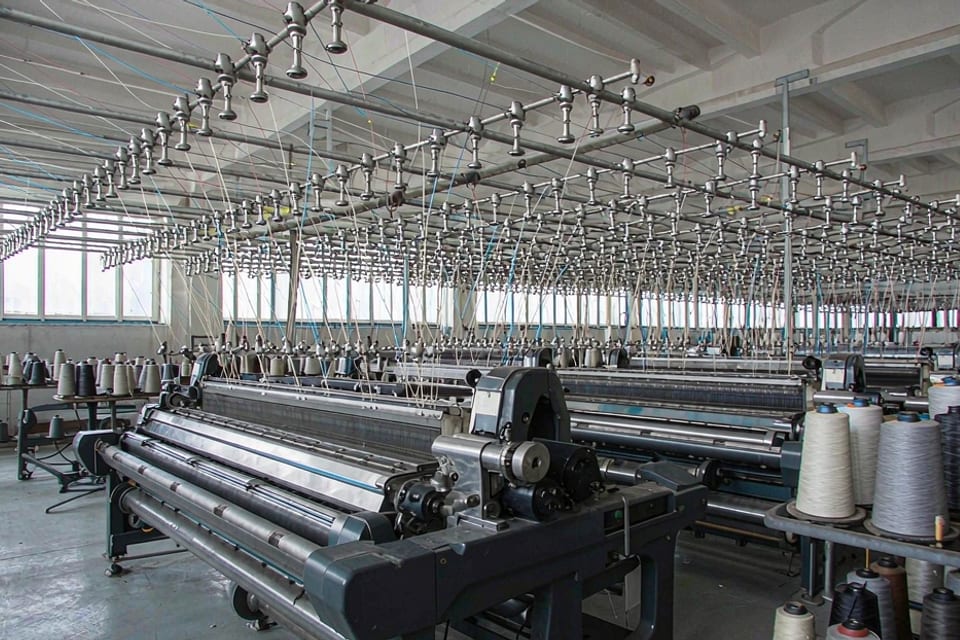
List of Seven Parts and Material Options
| Part / Component | Recommended Grade | Size / Thickness | Surface | Main Failure Modes | Reference Standards |
|---|---|---|---|---|---|
| J-type high-temperature high-speed dyeing machine cylinder | 316L/304/321 | Wall thickness approx. 4 mm | 2B/acid cleaning and passivation | Chloride SCC: Cl⁻ present in the dye liquor; at 140°C the critical temperature for austenitic SCC is far above approx. 60°C; cracks initiate from weld seams/flanges/HAZ | GB/T 3280; GB/T 150; GB/T 4334 |
| Cylinder heat exchanger tube bundle/weld seams | 316L | Tube wall thickness 1.0–2.0 mm | Pickling/polishing | Condensate Cl⁻ concentration + residual welding stress → SCC at weld seams | GB/T 151; GB/T 4334 |
| Guide roller (central shaft/roller surface) | 304/316L | Roller surface φ100–400 mm; wall thickness 2–6 mm | Mirror polish/hard chrome | Dye resistance/corrosion resistance; a 120-hour salt spray test with no rust is a typical acceptance criterion | GB/T 3280; FZ/T 90001 series |
| Bleaching vat/alkaline solution vat of bleaching machine | 316L | 2.0–6.0 mm | 2B/brushing | Chlorine bleaching + high-pH stress corrosion | GB/T 3280 |
| Casting vats/pipes | 316L/904L | 2.0–6.0 mm | 2B/brushing | Sulfuric acid/sodium thiocyanate + high temperature + Cl⁻ | GB/T 3280; ASTM A240 |
| Spinning box/dosing pumps | 316L | Forged parts/plate 5–30 mm | Finished surface/lap polishing | High-temperature polymer degradation + corrosion | GB/T 3280; GB/T 1220 |
| Wet needle/fiber mesh | 304/316L | 1.0–3.0 mm | 2B/perforated | High-pressure water washing + fiber abrasion + corrosion | GB/T 3280 |
Material SelectionSpecify Operating ConditionsMaterial Selection
Consider Application Characteristics
- What are the most common grades in this field? (316L, 304, 321)
- Common sources of corrosion: pitting and crevice corrosion (5 of 7 cases).
- For welded components, pay attention to stress corrosion cracking caused by sensitization and chloride exposure (3 of 7 cases).
- Thickness range 1–400 mm: thin plates are mainly formed parts (consider springback in bending and cracking in deep drawing), thick plates are mainly welded structures (consider heat input and sensitization).
Common Questions
Which stainless steel is used most in textiles?
Based on the total count of these 7 components, the most common grade is 316L (7 cases), followed by 304 (3 cases) and 321 (1 case). The specific part still depends on environment and temperature; for example, stainless steel countertops in contact with salt water should be switched from 304 to 316L.
Which type of component is most prone to problems?
Failure description, typically "J-type high-temperature high-speed dyeing machine cylinder": Chloride SCC: Cl⁻ is present in the dye formulation, and at 140°C the critical temperature for austenitic SCC is far above approx. 60°C; cracks initiate from weld seams/flanges/HAZ areas; recommended grades are 316L/304/321, wall thickness approx. 4 mm. Such conditions require defining the medium concentration, temperature, and cleaning method at the design stage.
What thickness should I choose?
The thickness range in the list is 1–400 mm. For thin plates, consider bending and surface finish; for thick plates, consider welding and structural strength. Values may vary depending on the equipment manufacturer for the same application. Re-verify with your drawing or operating conditions.
Related Materials and Adjacent Industries
Applications7
Thickness1–400mm
Grades400/316L